
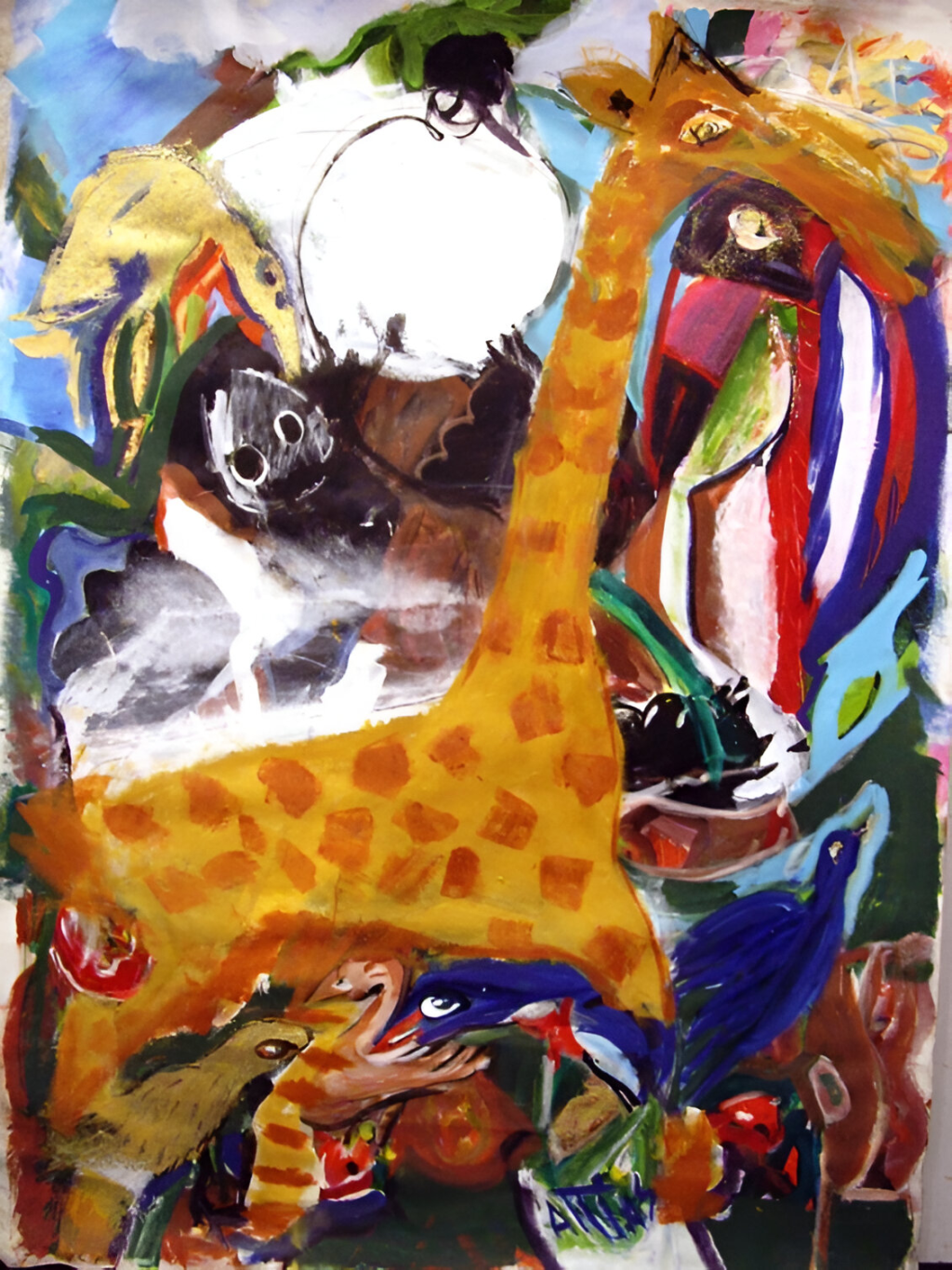
Susana and the Carousels
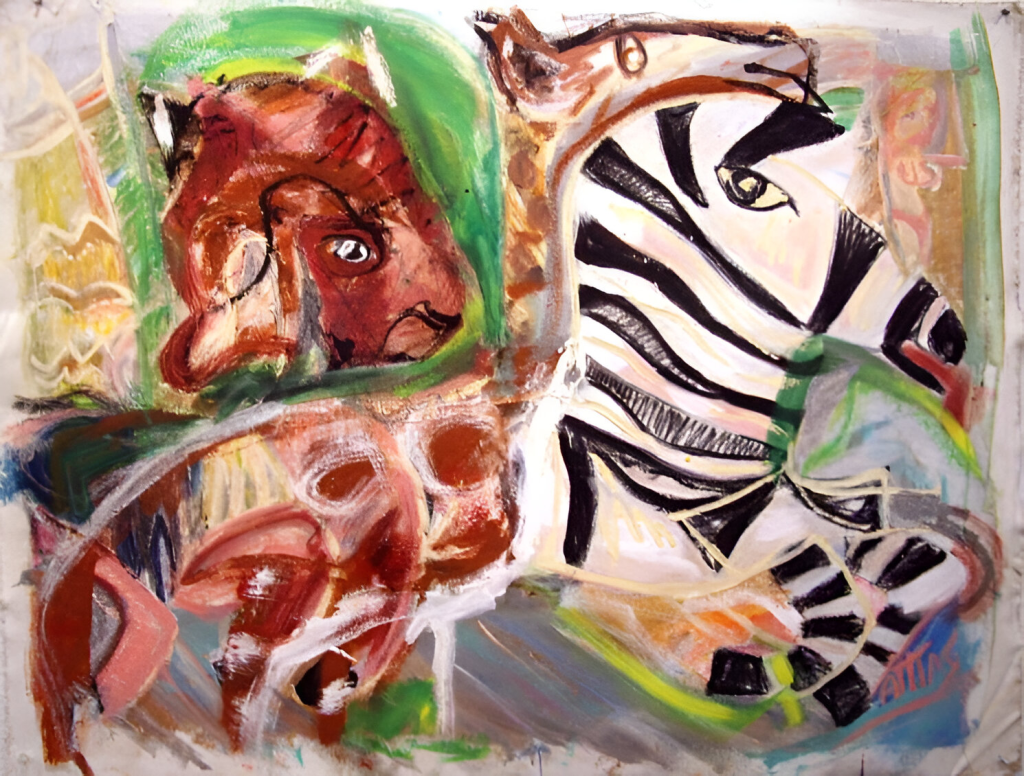
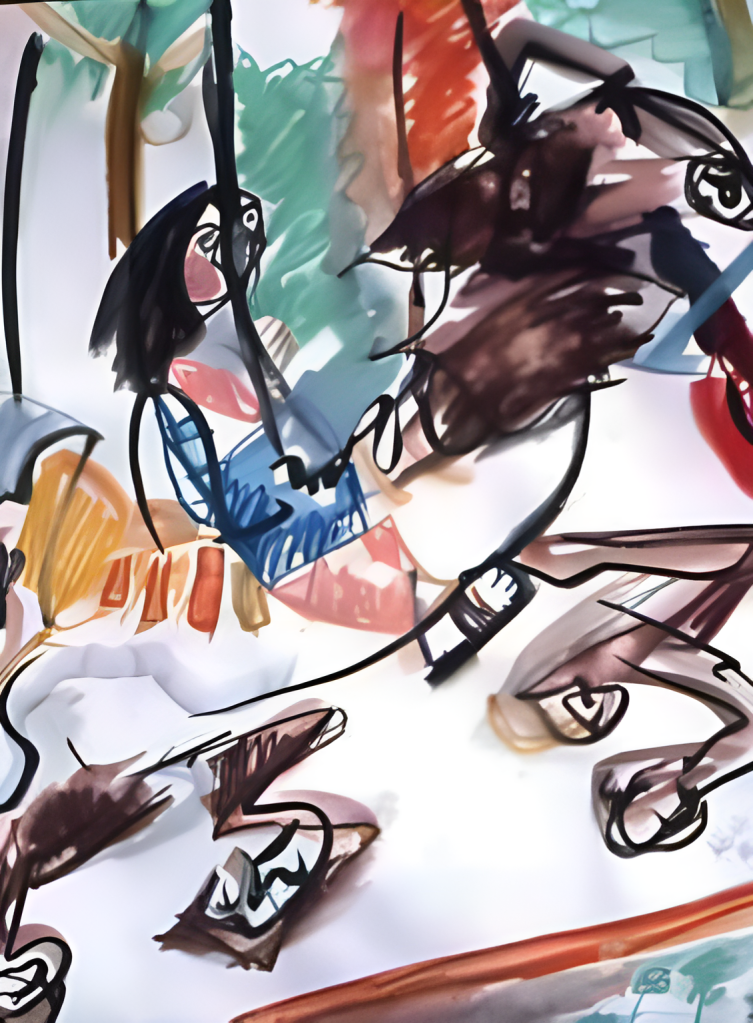
“From where does this neo-post-Fauvist or neo-post-diluvian painting emanate, which, according to a wildly autobiographical and almost visceral vision in its involuntary detachment from any school or fashion, Susana Attias presents to us now, after a season in New York and back in Caracas? In what trend or fashion can we place it for those of us who love definitions more than what they define?
I have witnessed her way of painting, her behavior, and, so to speak, her gesturality before the support (no matter the size), and no matter how much I have inquired into the affiliation, the possible origin, or the ascription of her work within the reference molds of the Transavantgarde or Art Brut, I have received no answer from her other than silence and the unrestrained vitalism of her configurations. Susana Attias has indeed seen a lot, a great deal of painting (we will not deny this), and although she has not followed the instructions or advice of any master, at least we know that she was for some time a student at the Art Students League of New York, where the gestural spirit of Hans Hofmann still so effectively endures.
I deduce from this (in the face of the conceptual deficiencies of today’s hyper-abundant culture) that there are painters, particularly those who, like Susana, know how to make brushes and bristles from their instincts, for whom what we call modernity or postmodernity, besides lacking meaning, is reduced to a present without memory, to an unstoppable pulsation in which they live at ease. They are painters who, by a mechanism perfectly welded to their sensibility, are never closer to themselves and to the truth than when they see the canvas before them as a possessive mirror in which there is nothing more than what they do and what only they see. This leads us to think that sometimes critics waste precious time trying to explain that which the painter, expelling it from himself, has resolved without ever having sought an explanation…”
Extract from “Susana and her Carousels” by Juan Calzadilla




 Susana Gordon